Weird Reaction Pics
The Art of the Awkward: Why Weird Reaction Pics Rule the Internet
Have you ever been deep in a group chat, scrolling through responses to a wild story or a questionable meme, when suddenly—there it is. That one image that isn't just a laugh, but a full-body cringe, a surreal twist, or a face so bizarrely expressive it feels like it was plucked from your own deepest, most private moments of confusion? That’s the magic of weird reaction pics. They’re the digital shorthand for the feelings we can’t quite articulate with words alone. But what is it about these gloriously odd, often unsettling images that makes them so universally powerful in our online conversations? Why do we instinctively reach for a picture of a confused cat with human teeth or a distorted screenshot from a 90s commercial instead of typing "lol"? This isn't just about humor; it’s about a fundamental shift in how we connect, communicate, and cope with the absurdity of the modern world. Let’s dive into the fascinating, cringe-worthy universe of weird reaction pics.
The Unexpected Rise of Weird Reaction Pics
The history of the reaction image is as old as the internet itself, tracing back to the early days of forums like 4chan and Something Awful. Initially, it was simple: a funny face from a movie or a cartoon to signal laughter or shock. But something evolved. As meme culture matured and platforms like Twitter, Instagram, and TikTok accelerated the pace of communication, the demand for more nuanced, specific, and strange emotional shorthand exploded. The "classic" reaction pics—like the Success Kid or Distracted Boyfriend—are clear and literal. Weird reaction pics, however, operate in the ambiguous, surreal space between clear emotions. They capture the feeling of "I'm not sure if this is good or bad," "I'm experiencing a cognitive dissonance," or "my soul has left my body." This rise is directly tied to our need for efficiency and depth in an attention-starved ecosystem. A single, perfectly weird image can convey a paragraph’s worth of context, sarcasm, and shared understanding. According to social media analytics, posts with unique or unexpected visual content see up to 2x more engagement than standard text replies, proving that in the battle for attention, the bizarre wins.
The Psychology Behind the Cringe: Why We're Drawn to the Bizarre
At its core, the appeal of weird reaction pics taps into powerful psychological principles. First, there’s relatability through abstraction. A photo of a real person making a shocked face is relatable, but it’s specific. A weird, photoshopped, or surreal image—say, a frog wearing sunglasses and holding a tiny briefcase—becomes a blank canvas. You project your own specific frustration, joy, or bewilderment onto it. It’s not their confusion; it’s the concept of confusion, distilled into an iconic, shareable form. This is linked to the psychological concept of apophenia—our brain’s tendency to find patterns and meaning in randomness. We look at a weird pic and find the exact emotion we need.
Second, there’s the benign violation theory of humor. Something is funny when it’s a violation (it’s weird, wrong, or unsettling) but also benign (it’s clearly not a real threat). A picture of a person with three eyes is a violation of normality, but because it’s obviously fake and presented in a joking context, it becomes benign and hilarious. This tension creates a pleasurable cognitive jolt. Furthermore, sharing these images fosters in-group bonding. Using a hyper-specific, niche weird reaction pic is like a secret handshake. It signals, "I am part of this community that understands this obscure reference." It builds social capital and a sense of belonging in a fragmented digital landscape. Finally, in an era of information overload and often serious real-world news, weird reaction pics offer a crucial cathartic release. They allow us to process complex, stressful, or absurd situations through a lens of absurdist humor, providing a mental break without dismissing the underlying feeling.
Decoding the Types of Weird Reaction Pics and Their Secret Meanings
Not all weirdness is created equal. The power of a great reaction pic lies in its precise, often unspoken, semantic meaning. Understanding these sub-genres is key to mastering digital communication.
1. The Surreal Animal Hybrid: This is the bread and butter of weird reaction imagery. Think of a cat with a human smile, a dog wearing a tiny hat and looking judgmental, or a bird with exaggerated, knowing eyes. These tap into the uncanny valley—that eerie feeling when something is almost human but not quite. The meaning? It’s for moments of gentle absurdity, passive-aggressive observation, or "I am watching this unfold with detached, alien curiosity." The animal’s inherent innocence makes the judgment feel less harsh.
2. The Distorted Human/Classic Media Glitch: These are often screenshots from old TV shows, movies, or commercials that have been digitally manipulated—faces stretched, colors oversaturated, mouths frozen in mid-scream. A classic example is the "WTF is this?" face from a low-budget 90s infomercial. This genre speaks to nostalgia and dissonance. It’s used for reactions to things that feel outdated, confusingly presented, or so bizarre they seem like a glitch in reality. It’s the visual equivalent of saying, "This makes no sense, and it’s making me question time and space."
3. The Abstract/Text-Over-Image: Sometimes, the weirdness comes from a simple, nonsensical phrase superimposed on a completely unrelated, mundane image. A photo of a serene landscape with the text "my spirit animal" or a picture of a door with "me avoiding my responsibilities." This style relies on deadpan absurdity. The humor is in the complete disconnect and the reader's mental gymnastics to connect the text, image, and context of the conversation. It’s for low-effort, high-concept jokes.
4. The "Uncanny Valley" Human: These are often real photos or videos of people making micro-expressions that are just off—a smile that doesn’t reach the eyes, a blink that’s too slow, a posture that is subtly wrong. They evoke a deep, primal unease. This is the go-to for reactions to something deeply unsettling, hypocritical, or morally questionable. It’s not a loud "WHAT?!" but a quiet, internal scream of "This is profoundly wrong."
How to Create Your Own Viral Weird Reaction Pic: A Practical Guide
Want to move from consumer to creator? Crafting the perfect weird reaction pic is an art form. Here’s your actionable toolkit:
1. Source Your Raw Material: Don’t just grab the first thing you see. Mine obscure media: public domain films, forgotten educational videos, old corporate training tapes, or non-English television. The more unfamiliar the source, the weirder (and more unique) the reaction. Stock photo sites with "awkward business" or "uncomfortable smiles" are goldmines. Also, consider AI image generators (like DALL-E, Midjourney) with specific, contradictory prompts: "a photograph of a smiling potato in a suit, feeling anxious, 1980s aesthetic." The AI’s struggle to reconcile concepts is the weirdness.
2. Master the Edit: The magic is in the manipulation. Use free tools like GIMP, Photopea, or even Canva’s advanced tools. Key techniques:
* Extreme Cropping: Isolate a tiny, weird detail—a single eye, a strange hand gesture—from a larger, normal image.
* Color Channel Splitting: Shift the red, green, and blue channels slightly to create a ghostly, glitch effect.
* Text Overlay with Mismatched Fonts: Use a cheerful, bubbly font for a sinister message, or a serious, Times New Roman font for something ridiculous. The dissonance is key.
* Speed Ramp / Freeze Frame: For video clips, find the single most awkward, non-sequitur frame and export it as an image.
3. Context is King (and Queen): A weird reaction pic is useless without the right conversational hook. Always pair it with minimal, precise text. "When you realize it's Tuesday" paired with a distorted, screaming face from a nature documentary is perfect. "My face when the server asks if I want dessert" with the serene, empty landscape photo is ideal. The text should be the setup; the pic is the punchline that lives in the ambiguous space the text creates.
4. Test and Iterate: Share in a small group chat first. Does the intended recipient get it immediately? If you have to explain it, it’s not a successful reaction pic. The best ones require zero explanation. Build a personal library, categorized by vibe (existential dread, passive aggression, surreal joy).
The Cultural Impact: How Weird Reaction Pics Shape Modern Communication
Weird reaction pics aren't just jokes; they’re a linguistic innovation. They represent a move toward a more visual, emotive, and efficient form of digital literacy. They fill the gaps where words fail, especially for complex, ironic, or layered emotions. This has tangible cultural impacts:
- Democratizing Nuance: Anyone can participate in complex sarcasm or shared trauma (e.g., using a weird "customer service" pic for any bureaucratic nightmare) without writing an essay.
- Creating Shared Canon: These images become cultural touchstones. A specific weird pic might be understood across thousands of Discord servers or subreddits, creating micro-cultures. Think of the "Wojak" variants or the "NPC" meme—they are entire visual lexicons for specific online experiences.
- Influencing Mainstream Media: Advertisers and TV shows now consciously mimic the aesthetic of weird reaction memes to seem "in the know" and relatable to younger audiences. The rapid-fire, surreal humor of shows like Rick and Morty or Nathan Barley exists in the same conceptual space as a well-crafted weird reaction pic.
- Archiving Digital Emotion: In a way, these images are a crowdsourced archive of 21st-century emotional experience. Future historians could look at the prevalence of surreal, glitchy, and uncanny reaction imagery and infer something profound about the collective anxiety, humor, and coping mechanisms of our time.
Navigating the Ethics and Copyright Quagmire
The wild west of meme creation has rules, even if they’re unwritten. Using weird reaction pics comes with ethical considerations.
Copyright & Fair Use: This is a gray area. Most reaction pics are transformative—they take an original image and add new meaning, context, or message through cropping, captioning, or juxtaposition. This often falls under fair use (in the U.S.) for purposes of commentary, criticism, and parody. However, it’s not a absolute shield. The safest path is to use:
* Public Domain materials (very old films, government images).
* Creative Commons licensed images (check the specific license—some require attribution).
* Original creations (your own photos or AI-generated).
* Screenshots from media you’ve personally purchased/accessed, used for clear commentary. Avoid directly reposting an artist’s work or a professional photographer’s image as your own reaction pic without significant transformation.
Avoiding Harm: The "weird" shouldn’t veer into hateful or harmful. Be mindful of:
* Deepfakes & Non-Consensual Imagery: Never use a manipulated image of a real person (especially a private individual) in a way that is degrading or deceptive.
* Tragedy & Trauma: Using surreal or "funny" weird pics in response to genuine disasters, deaths, or personal tragedies is in poor taste and can cause real harm. Read the room.
* Stereotypes: Be cautious of reaction pics that rely on harmful racial, gender, or cultural stereotypes, even if they’re presented as "just a joke."
Credit Where It’s Due (When Possible): In niche meme communities, it’s often appreciated to credit the original creator or the "OC" (original content) poster if you know it. It fosters a healthier creative ecosystem. A simple "Source: [link]" or "By [@username]" in a follow-up tweet can suffice.
The Future of Reaction Imagery: AI, AR, and Beyond
Where is this all heading? The evolution of weird reaction pics is accelerating with technology.
- AI-Generated Hyper-Specificity: The next frontier is on-demand, context-aware generation. Imagine an AI integrated into your messaging app that, upon typing "my face when the Wi-Fi drops during the Zoom presentation," instantly generates a unique, perfectly weird image tailored to your personal aesthetic or even your specific facial features morphed into the reaction. The weirdness will become infinitely personalized.
- AR Filters as Live Reaction Pics: Platforms like Snapchat and Instagram already have filters that distort your face in real-time. The future is situational AR filters—a filter that activates only when your camera detects a specific object (like a plate of food) and applies a pre-made weird reaction overlay to your live video. Your reaction becomes an immersive, shared experience.
- The Death (and Rebirth) of the Static Image: As video and ephemeral content (Stories, Fleets) dominate, the static reaction pic may evolve into short, looped video snippets or audio-visual memes (like a 2-second clip from a viral video with a specific sound). The core principle—weird, efficient, emotional shorthand—will remain, but the medium will fluidify.
- Algorithmic Curation of Cringe: Social media algorithms will get better at identifying and promoting the most "relatably weird" content. This could lead to a homogenization of weirdness, where only a few AI-optimized formats go viral, potentially stifling organic, grassroots weirdness. The counter-movement will be a push for hand-crafted, analog weirdness (e.g., physical photos scanned and edited).
Conclusion: The Enduring Power of the Gloriously Odd
Weird reaction pics are far more than a passing internet fad. They are a sophisticated, evolving language born from our collective need to navigate the overwhelming complexity of digital life with efficiency, empathy, and a healthy dose of absurdist humor. They validate our unspoken feelings, build communities through shared in-jokes, and provide a necessary pressure valve for the stresses of the modern world. From the surreal animal hybrids that soften our judgment to the glitched human faces that articulate our deepest dissonance, these images are the emotional emojis we never knew we needed. They prove that sometimes, the most profound communication isn’t in a well-crafted paragraph, but in a picture of a frog wearing a tiny crown, looking directly into your soul with an expression that says, "I, too, am bewildered by this spreadsheet." So the next time you’re at a loss for words, don’t just type "lol." Dive into the beautiful, bizarre archive of weird reaction pics. Find the one that doesn’t just match the situation, but transcends it. Because in the grand, chaotic conversation of the internet, the weirdest reaction is often the most honest one.
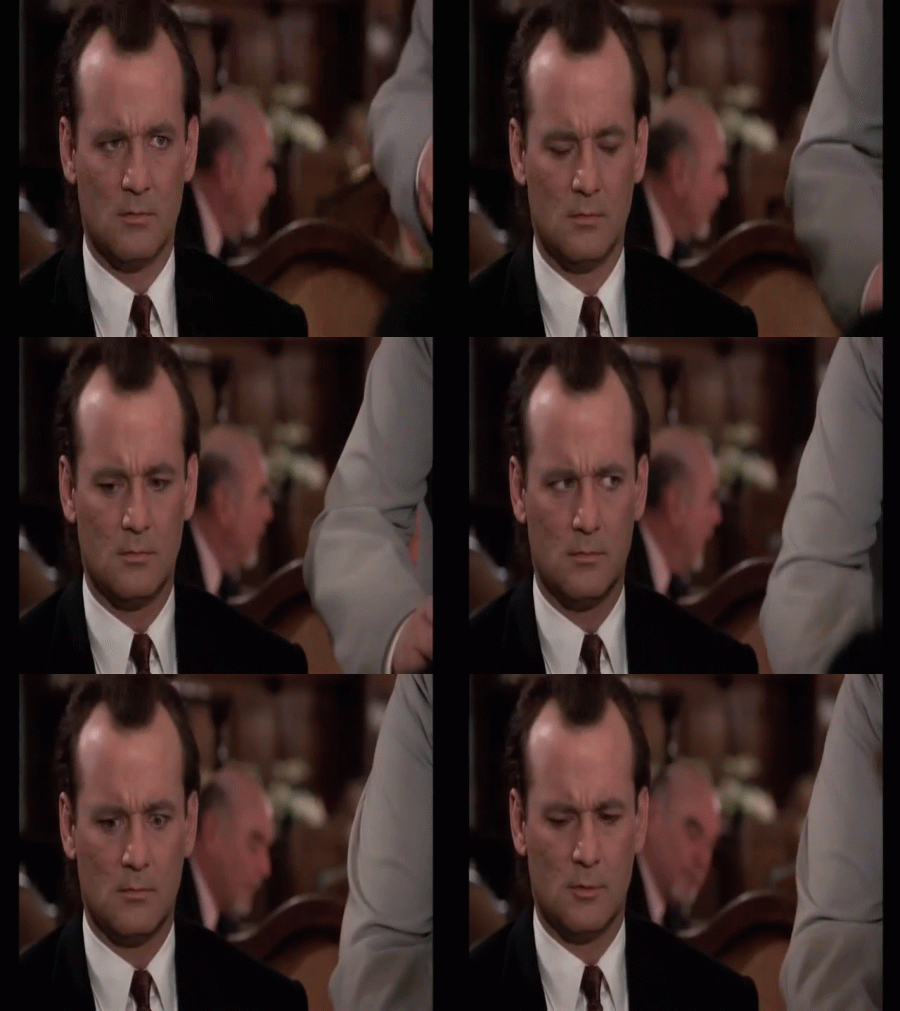
That's Weird - Reaction GIFs
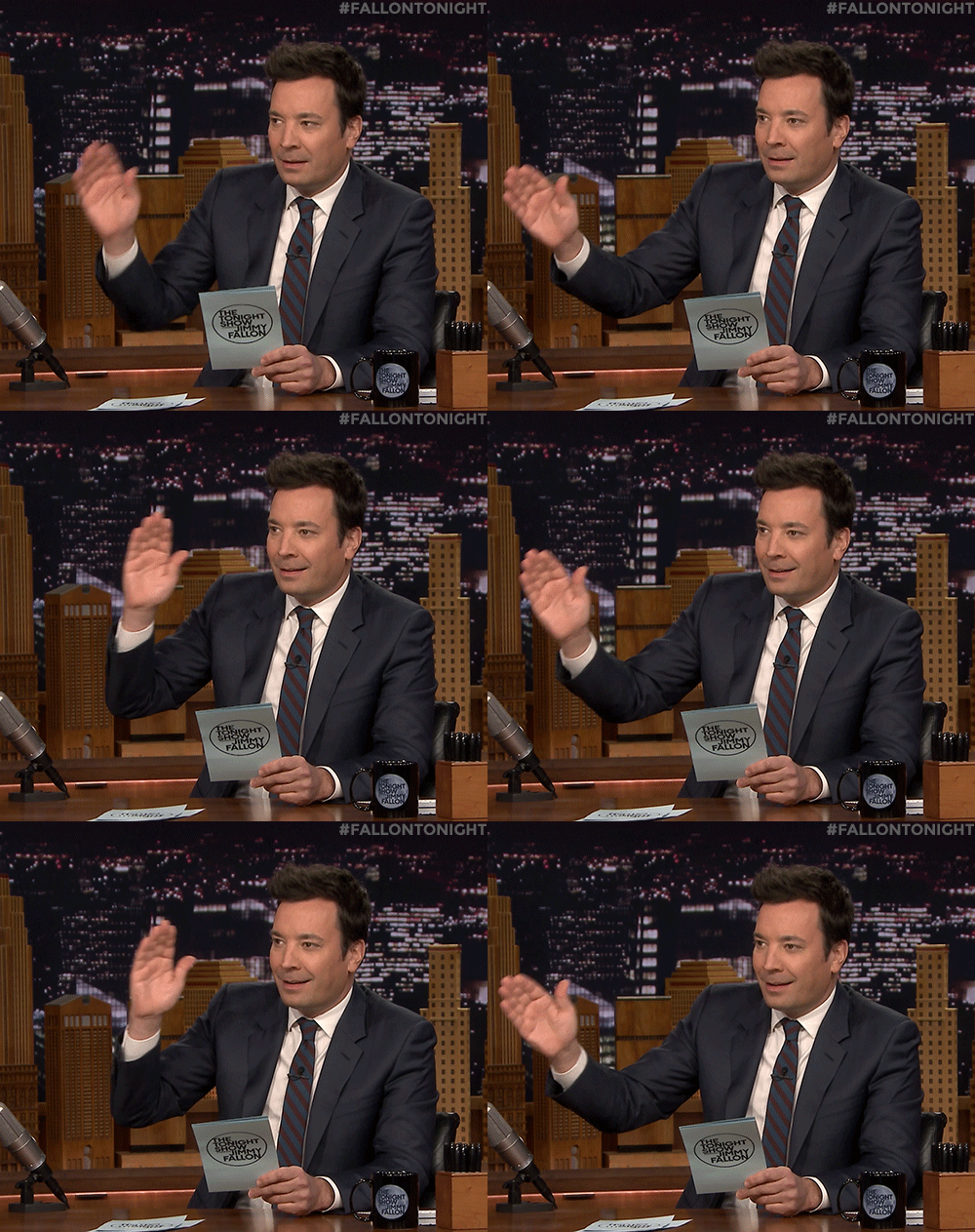
Weird GIFs | Reaction GIFs
Weird Reaction Meme - Weird Reaction - Discover & Share GIFs

